Startup Genome 2025 Report: AI Dominance, Small Nation Unicorns, and the New
The 2025 Startup Genome report reveals a bifurcating global startup landscape:
Startup Genome 2025 Report: AI Dominance, Small Nation Unicorns, and the New Ecosystem Order
The global startup landscape is undergoing a fundamental reordering. According to the 2025 edition of the Startup Genome report, the once-predictable hierarchy of innovation ecosystems is giving way to a two-speed world defined by extreme AI concentration and strategic specialization. While three cities—Silicon Valley, Beijing, and Paris—now capture an overwhelming share of AI startup funding, a second tier of emerging hubs is climbing rapidly by carving out niches. Meanwhile, small nations like Israel, Estonia, and Singapore are proving that ecosystem success depends more on talent, connectivity, and regulation than on population size. This article unpacks the hidden economic logic behind these shifts, examines Canada’s slipping AI advantage, and explores deep tech case studies—LIMEX and RICOS—that are redefining what innovation looks like outside the traditional power centers.
---
The New Geography of Innovation: AI Concentration vs. Ecosystem Diversification
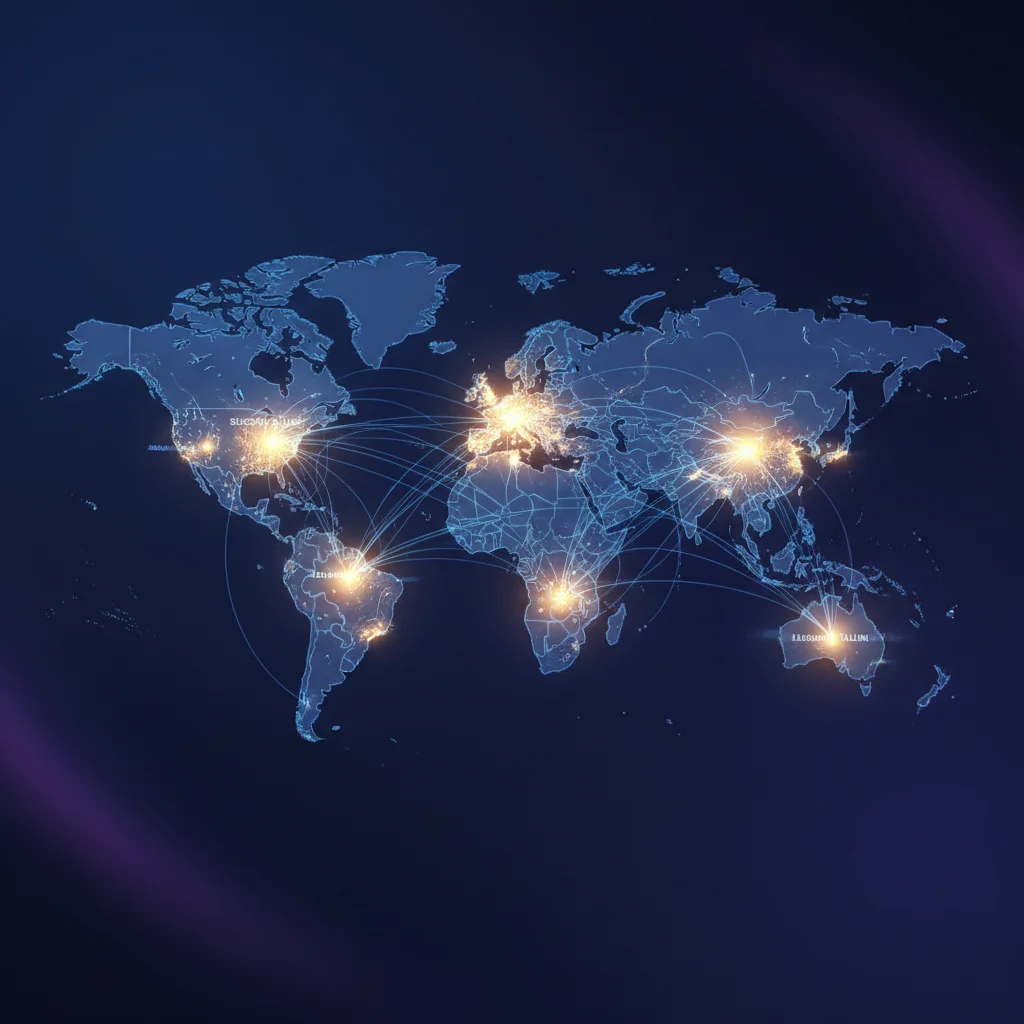
The 2025 Startup Genome report reveals a startling statistic: 80% of all AI startup funding is concentrated in just three ecosystems—Silicon Valley, Beijing, and Paris. This hyper-concentration is unprecedented in the history of technology cycles. Even more striking, only eight ecosystems worldwide qualify as "AI-native," meaning they direct at least 15% of their total startup funding to AI-first ventures.
[IMAGE: Animated map showing three large glowing nodes (Silicon Valley, Beijing, Paris) with thick funding flow lines, while smaller nodes like Busan, Seoul, Lisbon pulse and grow over time]
Yet this centralization tells only half the story. Alongside the AI giants, a fast-growing second tier is winning through differentiation. Busan, South Korea, climbed an astonishing 80 places in the GSER (Global Startup Ecosystem Report) Emerging rankings since 2023, driven by its focus on robotics, smart manufacturing, and blockchain-based logistics. Seoul vaulted from outside the Top 30 to a Top 10 global ecosystem in under five years, adding more than $100 billion in ecosystem value—a feat achieved by leveraging the country’s world-class semiconductor and electronics supply chain.
Lisbon entered the global Top 30 for the first time in 2025, capitalizing on its time-zone bridge between the Americas and Europe, a vibrant digital nomad culture, and targeted government incentives for deep tech and sustainable energy startups. The Portuguese capital now hosts over 2,500 active startups, up from fewer than 1,000 in 2019.
The data suggests a clear bifurcation: a tight cluster of AI-dominant ecosystems that pull in the bulk of compute-intensive capital, and a broad, fast-growing second tier that succeeds by focusing on sector-specific advantages. For policymakers, the lesson is that trying to compete head-on with Silicon Valley on general-purpose AI is futile. Instead, the winning strategy is to identify a vertical where local strengths—whether in manufacturing, logistics, energy, or materials science—can be converted into global leadership.
---
Small Nations, Big Impact: The Unicorn Per Capita Advantage
While the U.S., China, and the U.K. dominate absolute unicorn counts, a different leaderboard emerges when adjusting for population size. Israel, Estonia, and Singapore lead the world in unicorns per capita, outperforming far larger economies by a wide margin.
Israel continues to produce more than one unicorn for every 1.5 million people, driven by its strong military R&D pipeline (Unit 8200 and beyond), deep venture capital network, and diaspora that connects Tel Aviv directly to Silicon Valley and London. Estonia, with a population of just 1.3 million, has generated over a dozen unicorns—including Skype, Bolt, and Wise—by pioneering a digital-first government that issues e-residency, enables paperless company registration, and provides API-level access to public data. Singapore has used its status as a global financial hub to attract top talent from across Asia, combined with a fintech sandbox that reduces regulatory friction for startups.
[IMAGE: Bar chart comparing unicorns per capita: Israel ~0.7/M, Estonia ~0.9/M, Singapore ~0.6/M, USA ~0.15/M, China ~0.03/M, UK ~0.12/M]
As the Startup Genome report notes, “ecosystem success depends more on strategy, talent, and connectivity than sheer population or geographic size.” Small nations achieve this by:
- Targeted regulation: Singapore’s MAS (Monetary Authority of Singapore) created a fintech sandbox that lowers the cost of experimentation, while its variable capital company (VCC) structure attracts global fund managers.
- Diaspora networks: Israel’s global community of entrepreneurs and investors actively funnels capital and knowledge back home, creating a self-reinforcing cycle.
- Digital-first government: Estonia’s X-Road platform provides startups with access to secure data exchange, identity verification, and e-signatures, cutting administrative overhead dramatically.
The implication for other mid-sized ecosystems—from Chile to the UAE to South Korea—is clear: prioritize quality over quantity. Rather than trying to build a "next Silicon Valley," focus on deep expertise in a few verticals where the nation already holds structural advantages.
---
Abu Dhabi: The Emerging AI Capital Driven by Infrastructure and Regulation
If any city exemplifies the "specialization over scale" approach, it is Abu Dhabi. The UAE capital is positioning itself as a global AI hub through a combination of deep capital pools, world-class compute infrastructure, strong corporate demand, and regulatory clarity—a formula increasingly attractive in an era of geopolitical uncertainty.
Unlike Silicon Valley, where AI governance remains fragmented and litigious, or Beijing, where regulatory shifts can be abrupt, Abu Dhabi offers a "clean slate" for AI governance. The city’s sovereign wealth funds (including ADQ, Mubadala, and the Abu Dhabi Investment Authority) have allocated billions to AI infrastructure, including the construction of large-scale GPU clusters and data centers powered by renewable energy. The AI and Advanced Technology Council, established in 2024, provides a single point of regulatory alignment for everything from data sovereignty to algorithmic accountability.
[IMAGE: Photo of Abu Dhabi’s tech district featuring sleek glass buildings, solar panels, and a large digital billboard advertising "AI Hub" with the UAE flag]
Case in point: Abu Dhabi’s fintech and AI startups now benefit from a "regulatory sandbox+" that combines a fast-track licensing process with direct access to government procurement contracts. Startups specializing in AI-driven healthcare diagnostics, autonomous mobility, and climate-tech are finding that the combination of legal certainty and abundant compute capacity allows them to scale faster than in more established hubs. Abu Dhabi’s AI hub strategy is attracting startups seeking stability and scale, particularly from South Asia, Africa, and the Middle East.
This model—where infrastructure and regulation are treated as co-requisites—could become a template for other emerging ecosystems. Instead of competing on talent alone, cities like Dubai, Riyadh, and Doha are now racing to offer the most predictable legal environment for AI deployment, a move that may shift the center of gravity of applied AI innovation away from the West.
---
Canada’s Slipping AI Advantage and the Deep Tech Paradigm
No discussion of the 2025 startup landscape would be complete without examining Canada’s slipping AI advantage. For years, Toronto, Montreal, and Vancouver were celebrated as global AI powerhouses, thanks to institutions like the Vector Institute, MILA, and the University of British Columbia. But the Startup Genome report shows a relative decline: Canada’s share of global AI funding has dropped from 8% in 2020 to under 5% in 2025, as capital concentrates in the three super-hubs and as Canadian startups increasingly relocate to the U.S. for later-stage funding.
The underlying issues are structural: Canada’s venture capital market remains shallow for large rounds (over $100M), its regulatory environment for AI is still evolving, and the country lacks the deep compute infrastructure available in Silicon Valley or Paris. Canada’s AI ecosystem is now at risk of becoming a talent nursery rather than a scaling ground. Policymakers in Ottawa and provincial capitals are scrambling to reverse this trend with a new $2 billion AI compute fund and a national AI strategy update, but the report suggests that focus alone is insufficient without regulatory clarity and corporate demand.
[IMAGE: Line graph showing Canada’s AI funding share declining from 2018 to 2025, with other hubs rising]
Yet Canada’s story also highlights a broader shift: the rise of deep tech innovation outside the AI hype cycle. Two case studies illustrate this emerging paradigm:
LIMEX, a Japanese startup, has developed a limestone-based paper and plastic alternative that reduces carbon emissions by 60% compared to traditional petroleum-based materials. The company scaled from a university lab in Osaka to a global manufacturing footprint without relying on AI hype, instead leveraging Japan’s strengths in materials science and precision manufacturing. LIMEX’s success demonstrates that deep tech—capital-intensive, patent-heavy, and hardware-oriented—can thrive in ecosystems that are not AI-dominant.
RICOS, a South Korean startup, builds high-speed laser-based precision manufacturing tools for semiconductor packaging. In a world fixated on large language models, RICOS solved a critical bottleneck in advanced chip manufacturing, achieving 10x faster sintering speeds. The company’s growth was fueled by partnerships with electronics giants in Seoul and Busan, not by venture capital from Silicon Valley.
These examples underline a core message of the 2025 Startup Genome report: the new ecosystem order rewards specialization. Whether it is Abu Dhabi’s regulatory clarity, Estonia’s digital infrastructure, or Japan and Korea’s deep tech manufacturing clusters, the winning ecosystems of the next decade will be those that double down on their unique competitive advantages rather than chasing the AI monoculture.
---
For policymakers and investors, the implications are stark. The era of a single global innovation model is over. The battlegrounds of the future are niche focus, regulatory clarity, and the ability to convert local strengths into global value. As the Startup Genome report concludes, “size no longer determines success; strategy does.” The 2025 data makes it clear that the startup ecosystem is not flattening—it is being strategically reorganized. Those who understand this shift will be the ones who shape the next decade of innovation.
From Manila, Maria tracks venture capital flows, startup funding rounds, and the stories of up-and-coming entrepreneurs in the Philippines and beyond.


